
Plasma has unique properties that are not found in solids, liquids, or gases, which is why it is considered another state of matter.

DERMAPLAX: Before and After
DERMAPLAX is an electronic device used in aesthetic dermatology that operates by emitting waves that generate a high-voltage, low-intensity alternating signal.
How Does the DERMAPLAX Electronic Generator Work?
It emits low-frequency radio waves (50 kHz) that, through an electrical discharge, provide additional energy to the gas (atmospheric air), causing it to transform into plasma.
When the electrode comes into contact with the atmospheric air, the skin acts as a conductive medium, generating a plasma arc that acts on the epidermis.
The plasma energy causes carbonization of the treated tissue, limiting its effect to the air space through which the plasma passes.
With an initial application, only a superficial burn is produced, which contributes to the safety of this technique. As a result, it does not cause any deep tissue damage during the first treatment session.
To achieve a deeper effect on the lesion, it is necessary to remove the carbonized tissue that has formed and then repeat the application.
DERMAPLAX: A Safe and Effective Aesthetic Treatment
This innovative technique, based on safe and effective technology, delivers excellent results through a non-ablative approach, minimizing risks for the patient while reducing the likelihood of marks and helping to avoid surgical scars.
- Compared with laser treatments, plasma has the ability to produce a selective superficial burn regardless of skin color. In laser treatments, skin color acts as a specific target for heat production. Plasma energy, however, acts independently of skin color, which makes it especially advantageous in procedures such as tattoo removal.
- Compared with the electric scalpel, which uses much higher frequencies and currents (1 MHz), producing coagulation and scar tissue, the plasma generator uses only 50 kHz. It acts through superficial sublimation, meaning it does not generate scar tissue.
In summary, the key advantage of DERMAPLAX lies in the precision and selectivity of its application. It targets small, localized areas and acts only on the superficial layers of the skin, without affecting the surrounding tissues or causing damage to the dermis.
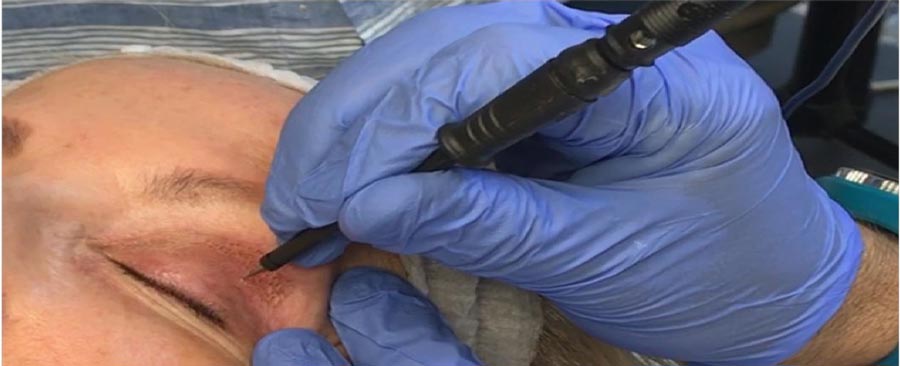
Treatment with the Plasma Generator
It is a new way of correcting wrinkles and skin irregularities, restoring firmness, as well as effectively treating sunspots and age-related pigmentation, fine lines around the eyes and mouth, and concerns on areas such as the hands, neck, and décolleté.
DERMAPLAX creates selective microscopic burns that stimulate collagen remodeling. Because only a fraction of the tissue is treated, the surrounding tissue promotes rapid recovery.
DERMAPLAX renews the skin by stimulating the growth of new, healthy cells from within, with visible results in a short period of time. Between the second and third month, complete tissue recovery occurs through the new production of collagen and elastin.
DERMAPLAX, benefits:
- It corrects wrinkles and sun- and age-related pigmentation spots.
- It improves skin irregularities.
- It removes skin growths and excess skin.
- It reduces fine lines around the eyes.
- It reduces scars caused by acne or surgery.
- It improves deep wrinkles (e.g., perioral “barcode” lines).
- It removes actinic keratoses, warts, xanthelasmas, etc.
- It lightens tattoos of any color.
Questions and Inquiries About DERMAPLAX Treatment
- How many sessions are needed and at what time intervals should they be performed?
In many cases, a single application is sufficient, for example in keratoses, xanthelasmas, warts, superficial tattoos, etc.
In rejuvenation treatments and for the removal of scars, wrinkles, etc., several sessions are required, usually between 3 and 6 depending on the severity of the condition.
When multiple sessions are needed, they should be scheduled at least 15 days apart. - Is the treatment painful?
Most patients describe a sensation of a prick or heat, which depending on the treated area and the patient’s sensitivity can be tolerable. To reduce discomfort, a topical anesthetic is applied to the treatment area before the procedure. - What happens after the treatment?
A small scab forms, accompanied by mild swelling in the treated area, which subsides shortly after. The skin then appears as if it has a mild sunburn, turning pink or red.
The skin returns to its natural tone within one to two weeks. A moisturizing cream can be used during the recovery process. - What side effects can be expected and how long do they last?
Swelling is usually moderate and subsides shortly after treatment. Redness may last a few days longer. The risk of infection, hyperpigmentation, or scarring is very limited.
The duration of these effects depends on the patient’s regenerative capacity and the intensity of the treatment. - What precautions should be taken after the treatment?
After each session, the patient must follow the physician’s recommendations regarding the care of the treated area.
Following the procedure, a sunscreen with SPF 50+ should be used, and direct sun exposure should be avoided for the three months after treatment.


